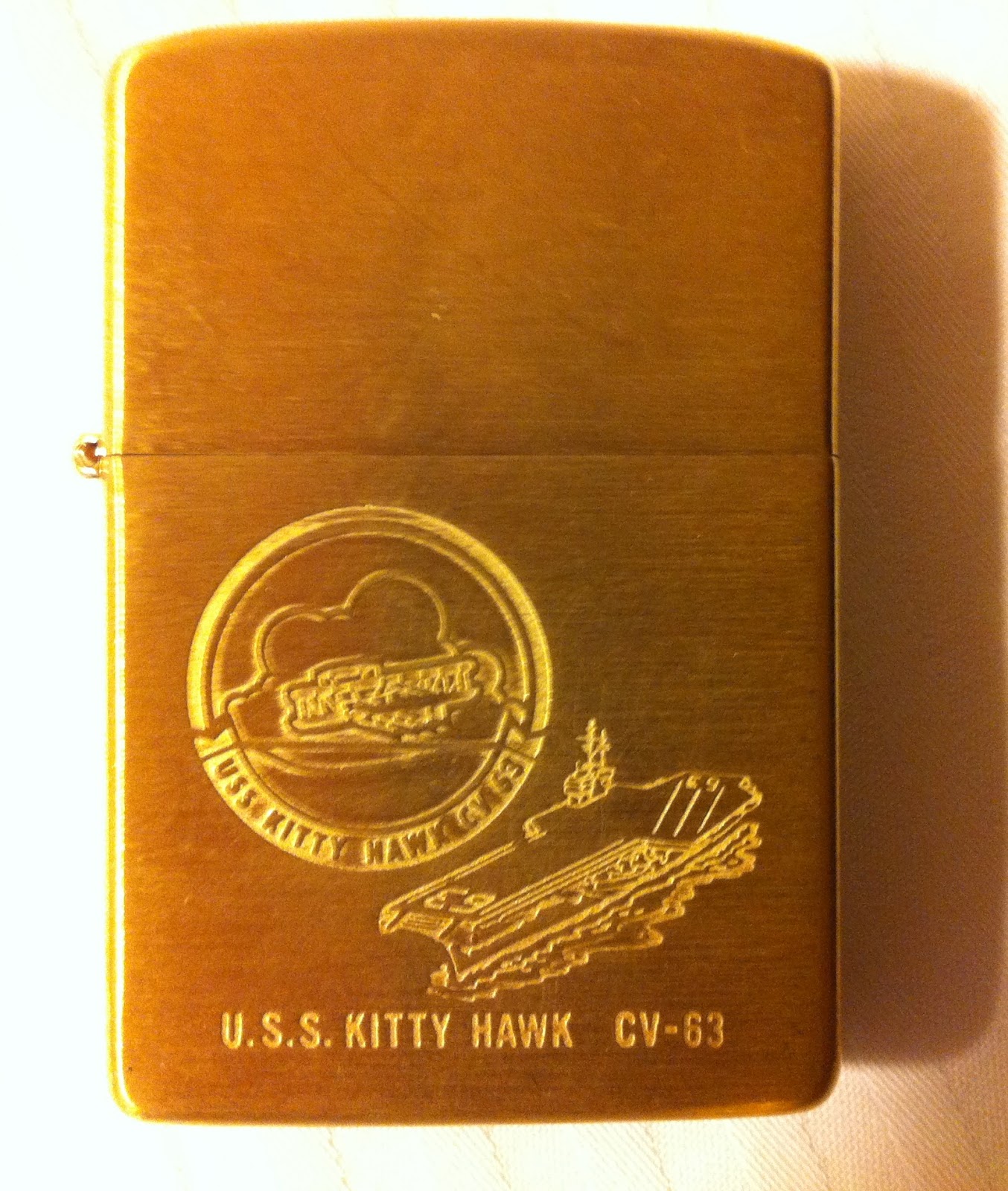
A sad, but interesting story…


I will say there is nothing sadder than seeing these once proud ships rotting away at the pier…

Carrier disposal proves a challenge for Navy By Christopher P. Cavas – Staff writer
Posted : Sunday Feb 19, 2012 NAVY TIMES

The flight decks that once thundered and boomed with jet aircraft are silent. The passageways and compartments where thousands of sailors worked, ate and slept are empty. The once meticulously swept and kept decks are worn and torn, some covered in bird droppings. The names of the Navy’s seven decommissioned non-nuclear aircraft carriers conjure up well-earned reputations as Cold War bulwarks. And while at least some are the objects of preservation efforts, chances are slim more than one will survive as a museum ship. The rest are taking up valuable pier space, and the only thing the Navy wants now is to get rid of them.

But that could prove a real challenge, if history is any guide. Breaking up the carriers presents unique industrial and security issues, and estimates of the cost to scrap them ranges from nearly nothing — according to the Navy — to as much as a half-billion dollars per ship.

DECOMMISSIONED CARRIERS
Carriers awaiting disposal
Shown are the carriers’ current locations and the planned disposal option for each.
• Forrestal (AVT 59, ex-CV 59), stricken Sept. 11, 1993. In Philadelphia. Scrap.
• Saratoga (CV 60), stricken Aug. 20, 1994. In Newport, R.I. Scrap (changed from donation hold).
• Ranger (CV 61), stricken March 8, 1994. In Bremerton, Wash. Donation hold.
• Independence (CV 62), stricken March 8, 2004. In Bremerton. Scrap.
• Kitty Hawk (CV 63), decommissioned May 12, 2009, and placed in Mobilization Category B, or “mothballs,”
for preservation and possible future use. In Bremerton. Unstated disposal option.

• Constellation (CV 64), stricken Dec. 2, 2003. In Bremerton. Scrap.
• John F. Kennedy (CV 67), stricken Oct. 16, 2009. In Philadelphia. Donation hold.
Source: Naval Sea Systems Command.
Previous disposals
• Coral Sea (CV 43) was scrapped in the 1990s in Baltimore. The scrap job took more than seven years and was declared finished Sept. 8, 2000. Coral Sea remains the largest warship ever scrapped.
• America (CV 66) was sunk by explosives May 14, 2005, as a fleet training and design study exercise. No photos of the ship sinking have ever been made public, save for one image of the swirl of water from the ship’s descent into the ocean.

The cost will depend on the price of scrap steel; the worst-case scenario for the Navy would be $2 billion to
$3 billion to make all the ships go away. But with scrap steel trading at almost historically high levels, the government’s disposal costs could be far less.

One carrier, Saratoga, already has been offered for scrap. Bids for the work closed in August, and a contract award announcement was initially expected in a month or two. But the Navy has yet to make a decision, although Chris Johnson,  a Naval Sea Systems Command spokesman, said Feb. 9 the award would be made “soon.”

In the meantime, the Navy on Jan. 27 announced that three more ships would soon be offered to bidders. Forrestal, Independence and Constellation are “supercarriers” of the same 1950s/1960s vintage and size as Saratoga, and each contains about 59,000 tons of scrap metal.

Saratoga would be the first supercarrier to be scrapped. Two other ships, Ranger and John F. Kennedy, are on donation hold, a status meaning the Navy will hold off on getting rid of the flattops while preservation groups strive to raise funds and strike  a deal for a location to display the ships.

Only one old carrier, Kitty Hawk, is on standby in case it needs to be used again. The cost to maintain and keep secure each ship is about $100,000 a year, NAVSEA said.

Figuring the cost

The service also is gearing up to dispose of the nuclear-powered carrier Enterprise, a 50-year-old ship similar in most ways to conventional carriers, save for its nuclear reactors. Enterprise is to begin its decommissioning process in 2013 after one more deployment.

Navy and government analysts estimate it will cost $1.1 billion to $1.7 billion to dispose of Enterprise and its eight reactors, spread over 10 years; as reported in May by the Congressional Budget Office, the Navy estimated that the reactors accounted  for about $730 million of a $1.1 billion price tag.

But until a contract is awarded to dispose of Saratoga, the cost to ditch the non-nuclear ships remains unclear. This may be  the best time in years to get rid of the ships.

“The supply of scrap steel now is tight,” Bryan Berry, a veteran reporter with MetalPrices.com, said Feb. 9. “These are the second-highest prices in history.”
Prices peaked during the summer of 2008, he said, when scrap steel traded at more than $800 per gross ton.
“That was ridiculous,” Berry said. “It was a bubble, and fell after only a few months.”
But prices have crept steadily back up to about $400 per ton for many scrap metals.
“Heavy metal scrap — obsolete metal, often from demolition jobs — right now is selling in Chicago for about $417 per gross ton [PGT] delivered to a steel mill,” he noted. “In the 1980s, it was below $100.”
No. 1 busheling steel — clean scrap steel in pieces less than a foot long — is trading for about $482 PGT, he said, with shredded scrap going for about $440 PGT.

The service already has taken advantage of the high scrap prices, if only on a few ships.
“The Navy’s cost of ship dismantling in 2010 and 2011 was just pennies per ship,” NAVSEA’s Johnson said. Although specific prices weren’t provided, he added that the recent contract awards were for less than 10 cents each.

Scrappers ready to go

At least two scrap companies have acknowledged bidding on the Saratoga job. Both are based in Brownsville, Texas, where about half the ship-breaking operations in the U.S. are concentrated.
Scrapping an aircraft carrier is a “big, big job,” said Richard Jaross, president of Esco Marine. “There’s tremendous oversight and costs. It’s not the same as other ships.”

Jaross has been in the ship-scrapping business for decades, and broke up the World War II Essex-class carrier Bon Homme Richard in 1992 at Long Beach, Calif. That ship, he said, contained about 20,000 tons of steel. Jaross noted the industry is vastly different after the turmoil of the 1990s, brought on in large part by the problems with the Coral Sea.

Strict regulations were slapped on the Navy and the industry in the late 1990s after Coral Sea, a 50,000-ton 1940s aircraft carrier, was scrapped in Baltimore. One generation earlier than the supercarriers that began with the Forrestal, Coral Sea remains the largest warship ever scrapped — and it wasn’t easy.
The carrier’s disposal stretched over seven years, bankrupted the original scrapper — who was sent to jail for environmental violations — exposed problems with the ship-scrapping industry, prompted several congressional hearings and led to federal  regulations prohibiting the disposal of U.S. government ships to foreign countries.

A lasting effect of the fiasco — the Coral Sea (seen above at the breakers) was the last Navy ship sold for scrap. Since then, the Navy has had to pay to dispose of all its old vessels.
“It’s a totally different industry now,” Jaross said. “We’ve transformed into a very disciplined business, with strict safety and environmental programs.”
Those changes “didn’t come overnight,” he noted. “It took a lot of rules and time to convince people how to deal with it.”
Bob Berry, head of International Shipbreaking in Brownsville, handled the largest Navy ship-breaking job in recent years, the 1970s-era amphibious assault ship Saipan. Work on that 24,000-ton ship was completed in February 2011. He was more sanguine about the prospect of scrapping Saratoga.
“Is it a bigger job? That’s just not so,” Berry said. “All of the same challenges in the Saratoga are no different than what we dealt with on the Saipan.”
Berry is looking for work for his yard, having just finished scrapping the Ticonderoga-class Aegis cruiser Vincennes in November.
Getting the carrier, he said, would “probably create close to 400 jobs.”

Both Jaross and Berry expressed strong interest in bidding on the next three carriers to be offered, and were perplexed by the delay in awarding a contract for Saratoga.
“They move so slow, it’s very secret, it’s not transparent,” Jaross said of the Navy. “I don’t know what the reason is behind it, I really don’t.”
“I haven’t got a clue,” Berry said.
The Navy Inactive Ships Program Office declined numerous requests for an interview about the ship disposal situation, its plans to dispose of the carrier fleet, or how the Navy changed its mind in recent years about a decision to sink most of the ships as artificial reefs. The office based its refusal on the fact that a contract award had yet to be made.

“This is the first carrier scrapping procurement and as such contains unique terms, conditions and requirements,” Johnson wrote  in a Feb. 2 email. “The procurement process has been longer than expected, but announcement of the apparent successful offer or is expected shortly.”
Ya know, for $26.5M on the average, I ‘think’ I could figure out how to take them apart…

And we need to get them gone, as the pier space IS needed for other things.

PSA- Hornady Recall…

I don’t shoot any of the ‘big’ pistol stuff, but some of you might… Got this from my Team Hornady link…

Hornady recalls 7 lots of 500 S&W 300 grain FTX
Sept 2010 and Oct 2011.

Lot #s are 3101327, 3110256, 3110683, 3110695, 3110945, 3111388 and 3111885.

Kudos to Hornady for being honest and providing this info as soon as they determined there was an issue…

More info at http://www.hornady.com/in-the-news/product-recalls

Word Verify SUCKS!!!

The new word verify sucks so badly,  I’m turning it off… Please play nice…
r,
OldNFO

A little humor…

Jewish modestyA Catholic, a Protestant, a Muslim and a Jew were in a discussion after a dinner.

Catholic: “I have a large fortune….I am going to buy Citibank!”

Protestant: “I am very wealthy and will buy General Motors!”

Muslim: “I am a fabulously rich prince…. I intend to purchase Microsoft!”

They then all wait for the Jew to speak….

The Jew stirs his coffee, places the spoon neatly on the table, takes a sip of his coffee, looks at them and casually says:

“I’m not selling…”

And THIS one is so damn true… sigh…

Of course there was NO ‘real’ coffee available this morning…  NOT a good thing at 0400, and not a damn thing open… Finally got in to work, and the damn Geedunk was closed for cleaning ARRGHHHH!!!

BUT, I found a vending machine… now to find Yen… scrabbled around and found ‘enough’… Coffee in a can is better than nothing, even if it IS made by Coca Cola… sigh

h/t JP and Wing

50 Years ago…

Continuing in the Marine theme…


50 years ago today (at least on the West side of the Dateline it’s today), Major John Glenn, USMC circled the world aboard Friendship 7 as the third launch in the Mercury Program…

Launch:
February 20, 1962. 9:47:39 am EST. Cape Canaveral Launch Complex 14. Powered flight lasted 5 minutes 1 second and was completed normally.
The mercury countdown began on 1/27/62 and was performed in two parts. Precount checks out the primary spacecraft systems, followed by a 17.5 hour hold for pyrotechnic checks, electrical connections and peroxide system servicing. Then the countdown began. The launch countdown proceeded to the T-13 minute mark and then was canceled due to adverse weather conditions. After cancellation, the mission team decided to replace the carbon dioxide absorber unit and the peroxide system had to be drained and flushed to prevent corrosion. Launch vehicle systems were then revalidated and a leak was discovered in the inner bulkhead of the fuel tank that required 4-6 days to repair. The launch was rescheduled to 2/13/62 and then to 2/14/62 to all the bulkhead work to complete. The precount picked up again on 2/13/62, 2/15/62 and 2/16/62 but was canceled each time due to adverse weather. The launch was then rescheduled for 2/20/62. 

During the launch countdown on 2/20/62, all systems were energized and final overall checks were made. the count started at T-390 minutes by installing and connecting the escape-rocket igniter. The service structure was then cleared and the spacecraft was powered to verify no inadvertent pyrotechnic ignition. The personnel then returned to the service structure to prepare for static firing of the reaction control system at T-250 minutes. The spacecraft was then prepared for boarding at T-120 minutes. The hatch was put into place at T-90 minutes. During installation a bolt was broken, and the hatch had to be removed to replace the bolt causing a 40 minute hold. From T-90 to T-55 final mechanical work and spacecraft checks were made and the service was evacuated and moved away from the launch vehicle. At T-45 minutes, a 15 minute hold was required to add fuel to the launch vehicle and at T-22 minutes and additional 25 minutes was required for filling the liquid-oxygen tanks as a result of a minor malfunction in the ground support equipment used to pump liquid oxygen into the launch vehicle. At approximately T-35 minutes, filling of the liquid-oxygen tanks began and final spacecraft and launch vehicle systems checks were
started.

At T-10 minutes the spacecraft went on internal power. At T-6min 30 seconds, a 2 minute hold was required to make a quick check of the network computer at Bermuda. The launch vehicle went on internal power at T-3 minutes. At T-35 seconds the spacecraft umbilical was ejected and at T-0 the main engines started. Liftoff occurred at T+4 seconds at  9:47:39am EST. 

Landing:  

February 20, 1962. 14:43:02 am EST. 800 miles southeast of Bermuda.
Recovered by the destroyer USS Noa. Lookouts on the destroyer sighted the main parachute at an altitude of 5,000 ft from a range of 5nm. The Noa had the spacecraft aboard 21 minutes after landing and astronaut John Glenn remained in the spacecraft during pickup. Original plans had called for egress through the top hatch but Glenn was becoming uncomfortably warm and it was decided to exit by the easier egress path. 

Orbit:

Altitude: 162.2 x 100 statute miles
Inclination: 32.54
Orbits: 3
Period: 88min 29sec
Duration: 0 Days, 4 hours, 55 min, 23 seconds
Distance: 75,679 statute miles
Velocity: 17,544 mph
Max Q: 982 psf
Max G: 7.7

Courtesy of KSC and NASA

50 years ago today we were successful, and landed 
men on the Moon 7 short years later…

We need to bring THAT drive and team effort back 
to the USA!

Those Goddamn Marines…

Another one from the Mil-email chain… And this one goes out to Heath and all those others who are current and former Marines…


Although this was written back in 2003, it holds true even today 🙂

Written by a Marine Reserve, he pretty much nails the whole Marine ethos…


I wonder how many times during Operation Iraqi Freedom that the phrase “Goddamn Marines” was uttered? Even in the best of times, Army and Air Force officers have been heard muttering some epithet about Marines, invoking either heaven or hell. Interestingly enough, we Marines find it all rather reassuring and, at times, amusing.

Most of the time, Marines do not go out of our way to be obnoxious; we are just doing what Marines have done for over 200 years. A good example is the fact that Marines always raise the American flag over mountains or cities they ! have conquered. From Mt. Suribachi to the City of Hue, to Kuwait City to Baghdad, U.S. Marines have raised the Stars and Stripes — in the latter
examples, much to the chagrin of higher headquarters. You don’t get these kinds of problems with the army.

So what is it about the U.S. Marines that they stick U.S. flags on
everything and do more with less, a less that is either old or an army hand-me-down? We call it Esprit de Corps , but it goes deeper than that. We learn and maintain myths of the past, which also means living up to those historical examples. Marine Corps boot camp is the longest of the services; it is where we mold young men and women into the mythical image called a Marine. You can be in the Army, you can join the Air Force, but you become a Marine. All of the other uniformed services have songs; the U.S. Marines
have a hymn. The basic pattern of Marine Corps uniforms comes from the late nineteenth century; our emblem “the Eagle, Globe and Anchor” has remained largely unchanged since 1868. The buttons on our dress blues, whites and greens date back to the founding of our corps. The Marine Corps is the only service that requires its officers to carry a sword, whose pattern dates back to 1805.

I think that the path of being a Marine was established long ago. On the 10th of November 1775, the Marine Corps was first established…in a tavern.


To this day, no matter where in the world, Marines celebrate the founding of our beloved Corps, much to the confusion of the other services.

A few years ago, a congresswoman from ado felt that the Marine Corps was radical and extreme. She contended that the Marine Corps was not politically correct, nor did we seem to be part of the Department of Defense’s transition to a “kinder and gentler” military. She was correct, and the Marine Corps took it as a compliment.

But the proof is in the doing, and during Iraqi Freedom the Marines
demonstrated what Marines can do. I watched with some amusement as a reporter asked a young lance corporal about being in Iraq and under rifle fire. “Love it, sir!” was his response. The reporter was taken aback and asked, “No, really.” The Marine then tried to explain that this is what he was trained to do, he looked forward to doing it and was now happy to be doing it. No doubt in boot camp he was told that he was “a minister of death praying for war.” Contrast that with the poor U.S. Army Apache pilots who
said that if they had to take life, they would do so reluctantly. You are either a warrior or you are not.

Marines are mission oriented. Live or die, the most important thing to a Marine is accomplishing the mission. Whether taking the bridge, river or town, accomplishing the mission is the Holy Grail of being a Marine. How the mission is accomplished is not so important, as it is expected of all Marines to accomplish the mission with the tools available. This is probably why we heard that Marines in one engagement were fighting with knives and
bayonets. This was hardly high tech, but it was effective. These Marines now have bragging rights, for they have proven that they talk-the-talk and walk-the-walk. I doubt there is a single Marine who is not envious.

Marines are practical, as well. I enjoyed hearing two reporters interviewing each other, one embedded with the army, the other with the Marines. The reporter with the army noted that the sandstorm had blown down many of the soldiers’ cots. The other reporter countered that the Marines did not have this problem because they slept on the ground. The Marine learns to live
with what he can carry on his back. He expects to be moved around on the battlefield via his two black Cadillacs (boots). If he is lucky and gets a ride on an amtrack, so much the better — but it is not expected! . At the end of a mission, the priority for cleaning is weapon, then equipment, and finally, body. When the other services talk about “quality of life,” they are referring to housing, clubs and food. Marines are talking about better weapons, equipment and training, winning the battle and coming home alive is considered “quality of life.”

All of this translates into combat power. In comparison to the U.S. Army’s 3rd Infantry Division, the Marines of I Marine Expeditionary Force were lightly equipped. Yet, they battled through the heart of Iraq, fought to the center of Baghdad and then moved off to Tikrit, taking that city as well. The press was so enamored with the Marines that in the final days of the war they even credited the Marines with deeds actually accomplished by the army.

Little wonder we heard “Goddamn Marines!” so often.

So we need to give the Marines some slack when they do something politically incorrect, such as raising the flag or appearing insensitive when killing the enemy. In the field, they look sloppy compared to the army, but are aggressive in the attack and generally unhappy in the defense. Marines take pride in their work, even if that work is war.

We are just Marines and that is what we do.

Lt. Col. David W. Szelowski USMCR (ret.)


And they do a damn good job of it too! 🙂

Random Stuff…

Being on the road is just ‘such’ fun…


At least I got a one car upgrade…


Or maybe I should say one squirrel upgrade, now I’ve got two, but I think they’re pissed at each other.  I swear, this car won’t get out of it’s own way anytime soon…


Another ‘problem’ is the GPS…


Um… little help over here please???  And it randomly bitches at me, but somehow “Bitching Betty” just doesn’t fit… AND I think it’s got a speed sensor set at 120kph, cause the ONE time I got going that fast, it started bitching at me again…


Sigh…


But there are GOOD things to having been somewhere before, cause you DO have local course knowledge of ‘alley’ shortcuts…


This one is a short cut off a main road that saves about 15 minutes, but you have to be out of it by 0730, when the delivery trucks stack up, if you’re not, it may take you 1/2 hour to go a couple of hundred meters…


And then there’s the ‘other’ set of alleys…


This is a photo of one entrance to the Makishi market in Naha, these are alleys that have been turned into a public shopping mall by stalls selling various things, that has grown to encompass about 3-4 blocks worth of alleys, now roofed over so it’s relatively dry!


This particular ally is the fresh food market, as shown below…  Other ‘sections’ have housewares, furniture, clothing, etc…


Like I said… FRESH! 🙂


Y’all enjoy the long weekend, we’ll be working…

A Tribute…

Got this one from a Retired Coastie Chief, and it’s well worth watching! This is for all those crazy bastards that jump out of helos to rescue folks…


And you can go HERE and read the Coast Guard losses… They prove the motto of Rescue- You have to go out, you don’t have to come back…


But I have to close with a funny story- Friend of mine was a Coastie SAR crewman back in the day; they used to go “practice” water landings out in the Atlantic on a routine basis, and when they did, he and the crew chief would take fishing poles and fish while they sat on the water!!!


h/t Blaine F.

Pathological Science and the Brady Bunch (and all their predecessors)…

This will be a bit of an unusual post, in that it is a collaborative post with LabRat over at Atomic Nerds.  I’m doing the framing and set up, and she is going to ‘finish’ the story…

So here goes…


First and foremost, this post is probably going to piss some people off, and you’re probably going to think I’m a heartless bastard for some of the things I say; but I DO NOT condone violence against innocents in either domestic situations, home invasion, robbery, and other criminal pursuits. I DO support people’s right to defend themselves adequately, and protect themselves and their families from harm.


Pathological Science is a termed coined by Dr. Irving Langmuir in 1953 at a scientific conference (http://www.cs.princeton.edu/~ken/Langmuir/langB.htm#Characteristic Symptoms). What I going to do is compare his symptoms with what the Brady Bunch and VPC do…


Symptoms of Pathological Science:

1.     The maximum effect that is observed is produced by a causative agent of barely detectable intensity, and the magnitude of the effect is substantially independent of the intensity of the cause. 

The effect is of a magnitude that remains close to the limit of detectability; or, many measurements are necessary because of the very low statistical significance of the results.


The Brady Bunch is all about the victims, as long as they are victims of gun violence. They prey on those deaths, use them to advance their agenda and parade the families of the victims at every opportunity.  But when you look at the incidences of gun deaths vs. other types of violent death (e.g. car wrecks due to alcohol, the totals are minimal by comparison…


Helmke’s quote from the Brady Bunch 2010 annual report (http://www.bradycenter.org/xshare/pdf/annual-reports/current.pdf) is a good example- 

“As I write, momentum is building for sensible gun legislation in the wake of the terrible shootings in Tucson on January 8, 2011. This tragedy, and countless others, might have been avoided or been less lethal if only our political leaders had shown some backbone and stood up to the gun pushers.”


As we all know, the shooter was captured, and as details came out there were multiple attempts to paint him as a right wing extremist, gun nut and every other ‘thing’ that would make him look bad. Instead, it came out that, much like the VA Tech shooter, he was a ‘known’ problem but was never reported to mental health authorities, and consequently was able to purchase the gun legally.  Once again, they danced in the blood of the dead…


2.     Claims of great accuracy.


HCI and the VPC (predecessors to the current iteration) were all about protecting the children. The Brady’s still jump on those statistics from time to time, especially when it’s a young child that died (however they use up to age 24 as a child).  You can go here (http://www.fbi.gov/about-us/cjis/ucr/crime-in-the-u.s/2010/crime-in-the-u.s.-2010/offenses-known-to-law-enforcement) and review the actual data without any spin… Note the radical difference in totals if you ONLY use 18 and under as the definition of children.  But THAT doesn’t fit the polemic they are using…

3.     Fantastic theories contrary to experience.


Any time there is a state that proposes allowing concealed carry, or a change to existing laws (e.g. Castle Doctrine in Florida); it’s always going to be ‘blood in the streets, or shootouts in homes’.  Also they like to pull out the old saw about ‘your gun will be taken away and you will be shot with it.”


4.     Criticisms are met by ad hoc excuses thought up on the spur of the moment.


She who does not need to be named, need I say more? And the whole light a candle, but ONLY for gun victims, and the back and forth that has created.


5.     Ratio of supporters to critics rises up to somewhere near 50% and then falls gradually to oblivion.


I think that VPC supporters are in serious decline, otherwise they would not have brought in Gross as the new president. He was a marketing and advertising executive at J. Walter Thompson, and probably did a lot of fund raising…


When you compare their levels of support to the NRA, and the number of detractors, not only on the net, but the counter demonstrations that are now occurring at some of the VPC functions, it becomes apparent they are falling into oblivion. 


To whit- The boycott of Starbucks, that we turned into a buycott…


Now I will turn this over to LabRat for the wrap up and her comments based on her research (her post should be up shortly).


Thanks for reading, and comments are appreciated!

Random Travel #439…

For those who’ve never had the ‘pleasure’ of Japan…


Pretty food, right?


Only problem is the ‘way’ it’s served…


What is done is that ALL the plates are laid out before the mess is opened for folks to eat, so the spaghetti is lukewarm at best, and the pork loin salad is almost warm.  The strawberries in a clear glaze were at least chilled…


And you may not know this, but the Japanese are head over heels in love with Chocolate, and probably make more chocolate than Switzerland!!!


This is one of the little ‘gift’ chocolates you could buy in the chocolate shop… for $14!!!  And I do mean little… that box is about 2 inches on a side and 1/2 inch thick!


There are three different chocolates in this, each ball on top is a different type, and the one IN the package is yet a third type of chocolate (and no I didn’t buy one to try, so I have no idea how good or bad it was).


And lastly, I’m STILL fighting with the network types trying to recover some work email stuff, and a friend sent me this in commiseration… 


Asshole… 🙂